


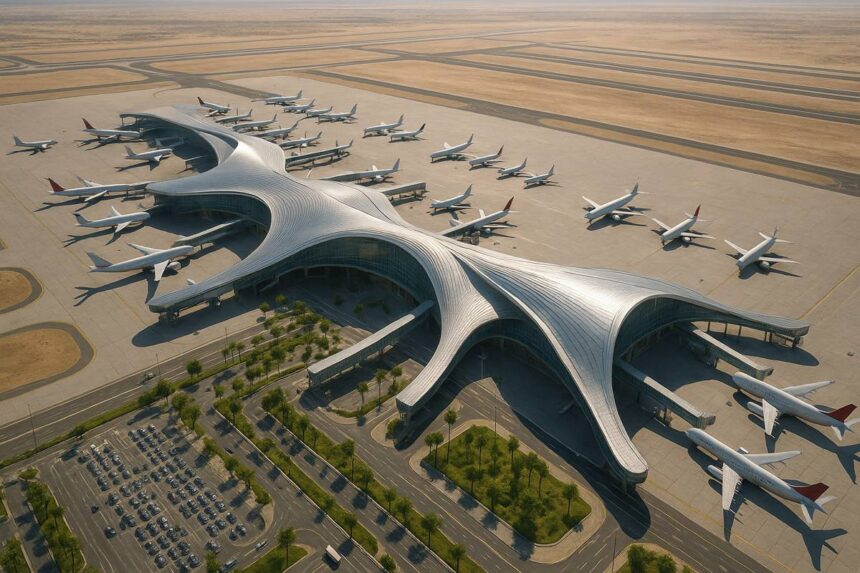
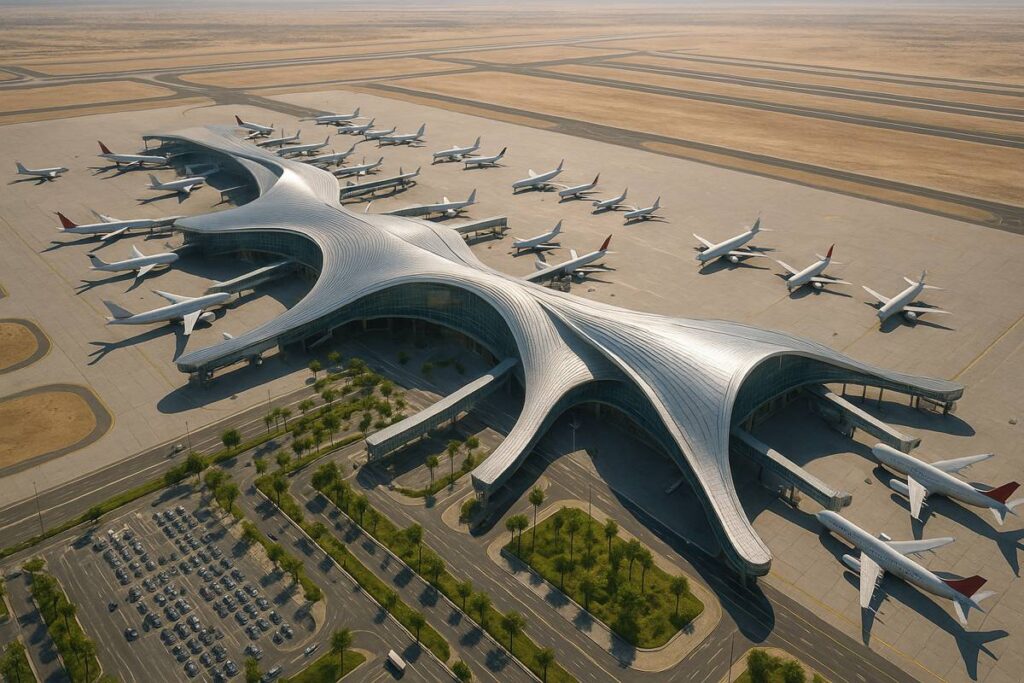
The development of Riyadh’s main airport is a strategic project of Vision 2030, designed to transform the capital of Saudi Arabia into a global aviation hub. The new King Salman International Airport (KSIA) is being built to replace the existing King Khalid International Airport, which has already reached its capacity of approximately 30 million passengers per year.
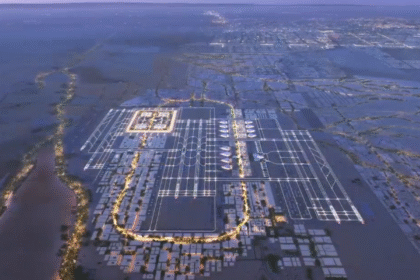
KSIA will be located on an area of 57 square kilometers north of the city. The project envisions six runways and a capacity of up to 120 million passengers per year by 2030, with the potential to grow to 185 million by 2050.
By July 2025, the urban planning and technical design have been completed, the master plan has been approved, and the management structure through the Public Investment Fund (PIF) has been established. Tenders for the first phases of excavation work have been held, and orders for contractor mobilization have been issued. The architectural design is being developed by a consortium led by Foster + Partners (USA), with leading Saudi and international engineering firms participating.
The project’s estimated budget is approximately $30 billion, including terminals, transport interchanges, utility networks, and green energy. KSIA will be part of the Riyadh Logistics Hub and will be directly integrated with the Riyadh Metro network, expressways, and future rail routes. The airport is designed with a focus on sustainability, utilizing renewable energy, digital management, and eco-friendly construction solutions.
The first phase is scheduled to begin operations in 2028, with full implementation scheduled by 2030.
For the construction industry, the project represents one of the most technologically advanced and capital-intensive hubs in the region. It requires a high level of coordination, manageable deadlines, and the ability to work closely with other megastructures in the capital.
“KSIA is a symbol of new aviation thinking: scale, sustainability, and digitalization.” It will become a benchmark for future international hubs and a test of the maturity of the entire design and contracting team involved in its implementation.” — Igor Bukato, international expert in construction and infrastructure