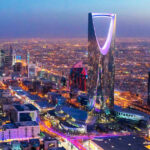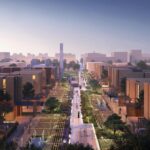



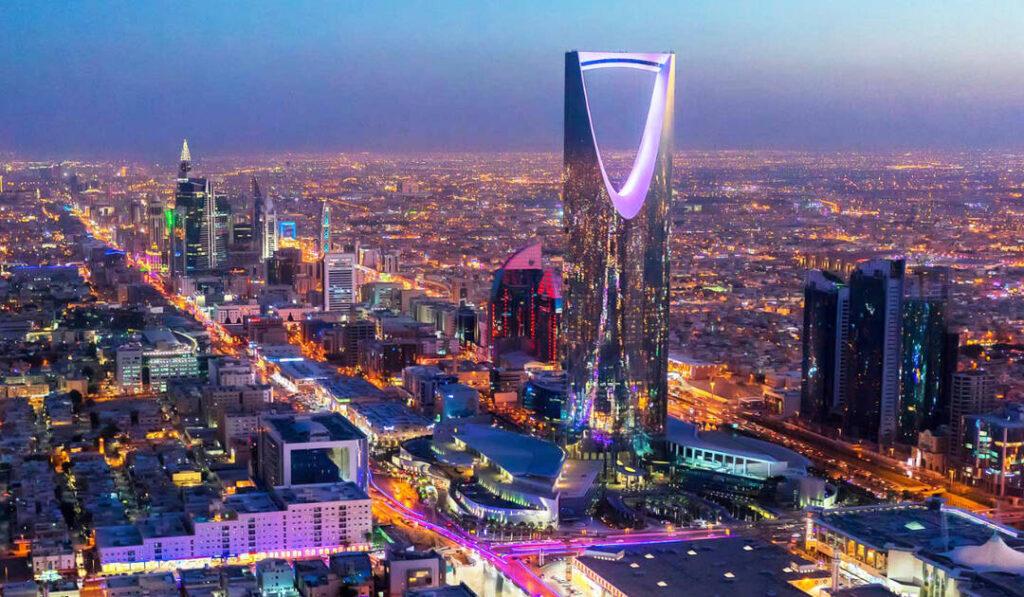
The transformation of Riyadh is a key project of Vision 2030, aimed at increasing the population from 7 million to 15 million and transforming the capital of Saudi Arabia into a modern, polycentric metropolis with a high-quality urban environment, developed logistics, and cultural richness.
Diriyah Gate, a major architectural heritage restoration project, is being implemented in the historic part of the city. The first phase has opened, with full completion scheduled for the end of 2027. The project includes more than 20 hotels, museums, business areas, and pedestrian zones. In the New Murabba district, preparatory work is underway for a business center dominated by the futuristic Mukaab cube (400×400 meters); construction is scheduled to begin in 2025.
In the eastern part of the city, King Salman Park (16 km²), the largest green space in the region, is being developed. Engineering and landscaping work has been completed, and the surrounding development is being designed in parallel. In the southwest zone, development of Qiddiya continues, with a focus on sports, cultural, and entertainment facilities.
One of the most significant achievements was the full operation of the Riyadh Metro network in December 2024: six lines, 176 km, and 85 stations. The system is integrated with ground transportation and serves as the foundation for the capital’s new mobility.
Tens of billions of riyals are being invested in road infrastructure development. Major highways (including Riyadh Ring Road) are being expanded, and overpasses, interchanges, and pedestrian bridges are being built. Particular attention is being paid to access to new clusters: Diriyah, Qiddiya, and New Murabba are being integrated into the expressway network and public transport routes. Digitalization of traffic management and the implementation of intelligent traffic systems are underway.
By 2030, King Salman International Airport (KSIA) is scheduled to be operational. It will have six runways, an area of 57 km², and a capacity of up to 120 million passengers. In 2025, the design was completed, and key EPC contracts were signed.
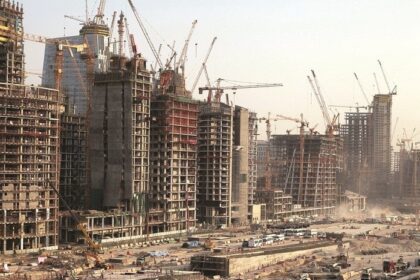
Project implementation is accompanied by budgetary burdens and requires a high level of coordination. This creates certain risks, particularly in terms of deadlines and funding reallocation. Nevertheless, the scale, pace, and systemic support make Riyadh the largest construction site in the region and an attractive field for professional contractors, suppliers, and engineering companies.
“The reimagining of Riyadh’s urban environment sets a new standard for the capitals of the future. Not only large contractors are in demand here, but also flexible, specialized teams capable of working under high project density and technological requirements,” commented Igor Bukato, an international expert in construction and infrastructure.